
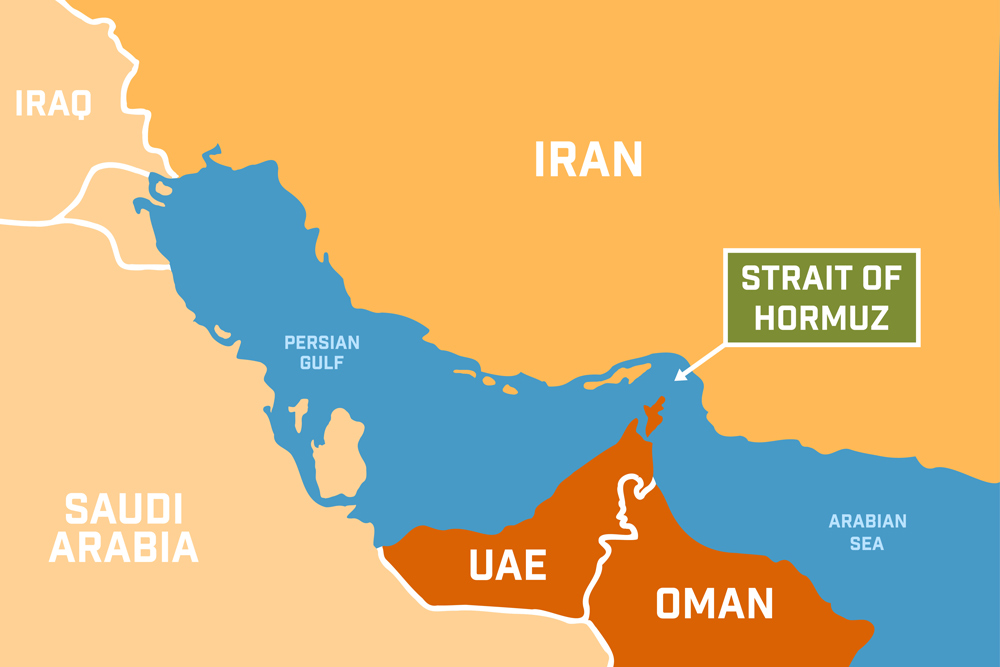
Four container ships have been attacked in the Strait of Hormuz this week, with the sinking of GFS Pride highlighting the worst wave of shipping attacks since the Middle East conflict began.
The Singapore-flagged vessel caught fire after being struck by an unidentified projectile on 13 October. All 21 crew members were safely evacuated without injury, but the ship subsequently sank. Floating containers were reported approximately four nautical miles northwest of Ras Shaykh Masud, creating an additional collision hazard for vessels navigating the area.
Singapore-flagged GFS Giselle sustained hull damage the same day but reached safety under its own power, with all 22 crew unharmed. Marshall Islands-flagged Al Saadiyat continued sailing after being struck, without reported casualties or significant damage. Indian-flagged DP World Kaveri was attacked on 11 October, leaving one seafarer injured.
The IMO has also confirmed six tanker attacks since 10 October, with a seventh separately reported. Meanwhile, dry bulk carrier Cape Dao sank this week following a 23 September attack that killed one seafarer.
The escalation raises concerns about regional shipping security, although published plans continue to point towards more carrier returns to the separate Red Sea–Suez route.
Maersk and Hapag-Lloyd have expanded their Gemini return programme beyond AE15 and AE19 to include AE5, AE11, AE12 and ME2. Further returns are planned by the Premier Alliance, with ONE’s FE1 and IOX services scheduled for westbound Suez passages in November. These plans remain subject to security conditions.
The recovery is already substantial: weekly container capacity passing through Suez averaged 753,000 TEU in early October, exceeding half its pre-disruption level. Shorter routings could improve Asia–Europe transit times, but dependable schedules remain critical for customers.
Unique Forwarding is monitoring developments and carrier schedules. Please contact our team for help assessing shipment impacts and exploring alternative solutions.


