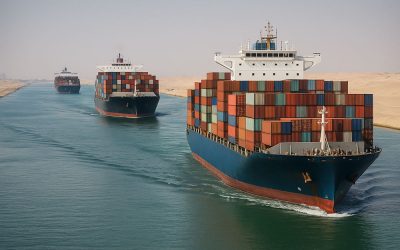
Asia ocean freight rates are traditionally volatile, with constantly moving ebbs and flows between capacity (supply) and demand. However, since the rerouting of ships away from the Red Sea route, supply difficulties have completely unbalanced the market.
Prior to the Houthi attacks on commercial shipping, an average of 12 ships were needed to maintain a weekly service from Asia to Europe, but with the longer transit times it now takes around 15 for every schedule loop. Ordinarily there are around 25 scheduled loops amongst the major alliance carriers, which suggests that up to 75 vessels may have been needed to get back to full capacity on the trade lane.
To some extent, the market has been lucky in that an unusually high amount of newly built container ships have entered the market in the past twelve months, which means that some vessels that were due to move to other services, or even be scrapped, have been able to take up some of the extra load. However, with rates spiralling upwards, it is difficult for many importers and exporters to feel lucky.
Clearly, more ships are needed to fill the gaps in service and ordinarily carriers might turn to the charter market to hire vessels. This is another volatile market that rides supply and demand, so rates have gone through the roof, as evidenced by one major carrier having to pay a record $150,000 per day for a 7,000 teu ship this month.
When considering that up to 75 new ships may have been required, this suggests that between 500,000 and 1 million more containers could have been needed, so it’s not hard to see where the severe shortage of equipment has come from.
The good news is that many carriers order books for new ships and container equipment are full to the brim, which should help ease the situation, and hopefully some time soon.